EP.175/ LAMIK BEAUTY
LAMIK Beauty: Inviting customers to be a part of your brand
In this episode of Retention Chronicles, Mariah sits down with Kim Roxie — founder of LAMIK Beauty — for a deeply inspiring conversation on entrepreneurship, identity, and building a beauty brand that truly sees its customers.
Kim shares her 21-year journey from launching a tiny makeup + brow studio in a Houston mall to building LAMIK into a national clean beauty brand distributed through JCPenney, Nordstrom, Hy-Vee, and more. She opens up about the bold decision to close her successful brick-and-mortar shop in 2018, betting everything on transitioning LAMIK into a digital-first DTC brand — a risk that positioned her perfectly for March 2020.
Kim explains how she used early AI tools, quizzes, and virtual try-on to create a personalized online experience long before it became mainstream. And when the world shut down, she turned to Facebook Live — streaming every Friday night for four years with her daughter — building a fiercely loyal community that ultimately became the foundation of LAMIK’s growth and even created their own “Ladies Who LAMIK” group.
The episode digs into how Kim thinks about customer acquisition, what makes a product “sticky,” the importance of letting customers co-create your brand, and why sustainable retail expansion requires data, intentionality, and humility. She also shares an honest look at systemic challenges in beauty, the reality of scaling without massive funding, and the deep faith that continues to guide her through volatility in today’s retail environment.
This conversation is equal parts tactical, emotional, and empowering — a must-listen for any founder, beauty lover, or builder navigating the balance between vision, community, and resilience.
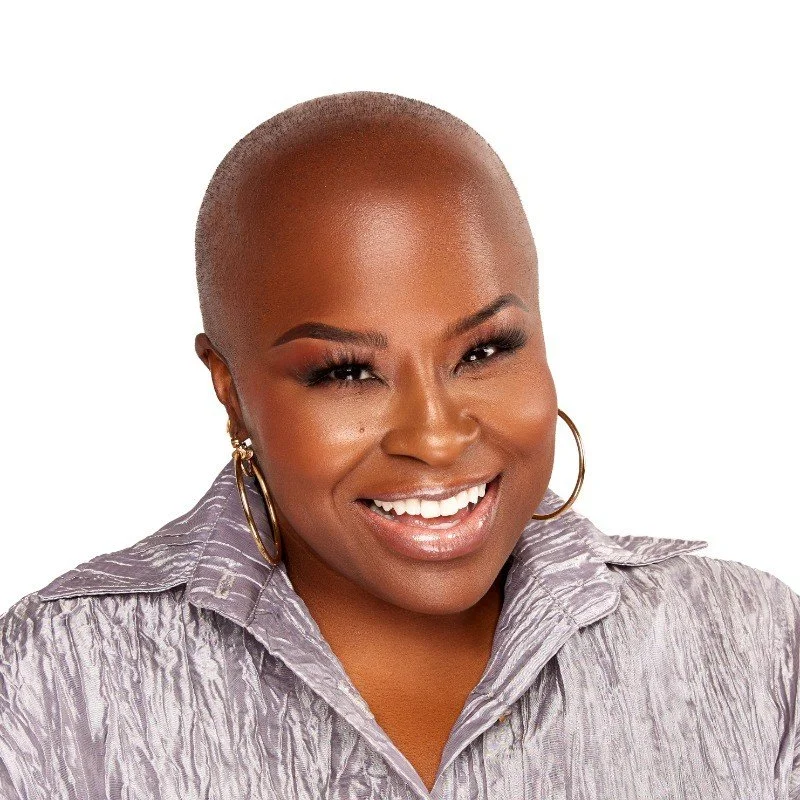
EP. 175
KIM ROXIE
Episode Transcript
Hello everyone and welcome back to Retention Chronicles. I am so excited for our episode
today. Kim, thank you so much for making the time.
I know we briefly met at Shop Talk and that conference is so crazy in all of its wonderfulness.
And I caught you right as you were coming off stage after getting your panel, you know,
discussion. So I'm happy that it's a month or two after the conference.
Things have settled down for me. Tell us how it's been for you since the last time we spoke and
say hello to our audience. Tell us a little bit about yourself, through all the things.
Yeah, so I'm so happy to be here. Thank you, Mariah, for the invitation. Coming off the Shop
Talk stage was invigorating.
It was a lot happening. You know, Shop Talk is just such great energy, but it's a lot happening,
right? And so, but this year my voice was elevated on stage, doing a panel conversation and
talking about the volatile retail environment that we are in and how to sustain and move
through it. And so I was kind of coming off the stage feeling almost like I had kind of gotten
some stuff off my chest.
As an indie founder and beauty owner of a clean color cosmetic company and makeup line, you
know, there has been so many changes, rapidly changing within the past year to two years. And
so I just finally felt like I get to speak on it. And so I got a chance to do that.
But meeting you was great. And getting to come here today and share will be very good. But
I'm Kim Roxie, K-I-M-R-O-X-I-E, founder of Lumiq Beauty.
I love it. I love it so much. And I know I walked away from your panel and so many other panels
of just like, okay, this all makes so much sense.
And there's so many ideas here, but also there's so many things on the to-do list now where it's
like, oh my God, I have to look into this. And so I know I walked away being very impressed yet
again by the conference and the quality of everyone who was there. So thank you for being
here.
Have you always felt like you're an entrepreneur and wanting to have your own brand or
business? Obviously you're in the beauty space. So have you always kind of felt yourself pulled
to that arena or how did you kind of arrive at the seat that you're sitting in today? Yeah, I don't
know. I don't know if I truly know if I always wanted to be an entrepreneur.
I, to be honest, I just realized I was around entrepreneurs when I was growing up just recently.
That's cool. I was in an interview and someone asked me about some of the first entrepreneurs.This was within the past couple of years. What have you like the first entrepreneurs I knew? And
I thought about it and I was like, oh my gosh, my piano teacher was an entrepreneur. She had
students, she had a business.
The word entrepreneurship wasn't introduced to way later, but I didn't really understand I had
been around them that whole time. And so for me, I actually became an entrepreneur at 21.
And so I started with my own makeup and eyebrow shop in the mall in Houston, Texas, a mall
called Sharpstown mall.
And, you know, Houston is the fourth largest city in the country. And so this was not some little
small pond I was swimming in. But to me, it was just me creating a space where women could
get their makeup done who had been overseen or looked over by the beauty market.
And me as a dark-skinned woman to the beauty industry, I had totally felt overseen, like
overlooked. And so overlooked and so not seen enough. And so I wanted to create a place
where people felt seen and they get their eyebrows done.
I got my aesthetics license. And so I had just graduated from Clark, Atlanta University. And as
soon as I graduated, I opened up my makeup shop.
So this has been 21 years, me as a full-time entrepreneur in the beauty industry. Who would
have known? So it sounds like, you know, it sounds like a person who always knew they wanted
to be entrepreneur. It's just that almost like how some people get married young or some
people have, you know, or start a hobby young or whatever.
It's just that I started a business at a young age and the result that you see right now is just a
person who never, who quit sometimes because I did quit sometimes mentally. And that's
realistic, right? Right. But you're just looking at someone who continued to still wake up and put
one foot in front of the other, even, you know, in my own quitting sort of mode in some ways.
But we went from having a makeup shop in a mall doing eyebrows to in March, 2020, launching
a national e-commerce, you know, e-commerce first clean makeup line. And it is made up of
products like the revelation brow duo, which is a brow powder that you put in your eyebrows
with a concealer. And it comes in all different shades.
My whole makeup bag is in right here. Then you have- It's perfectly located for a podcast. Then
we have our, you know, our lip glosses, our, this is a very popular color.
It's called iconic. Then we have now for the season that we're in, influential. This color is
gorgeous.
It's called influential, highly recommend. And then we have our mascara that's made from
more natural and organic ingredients. And to be honest, nobody has really tried this, like not
from wood and said that it caused any irritation.What we're known for is being able to use our makeup and not being irritated, use our makeup
and not feeling like it's too heavy and those kinds of things. LAMIK is that. LAMIK is a brand
that's inclusive.
So all shades of women can wear it, but we're known for our brow products. We're known for
those eye makeup products because I actually diagnosed with a form of alopecia and I use the
brow duo to fill in my brows. And it has just, my transparency has become our platform.
Yeah. And I think that is so powerful. Like, I know I'm not alone in that, right? I know as a
consumer, when I put my consumer hat on, I love seeing a founder who is like, this is the
brand.
This is why I wanted this built in this way. That's why I want it to be clean beauty because I want
it to be, you know, it doesn't irritate my skin. You can wear it for a long time and use it on your
skin and not have it disrupt your, you know, your habits or bother you with sensory issues or
any of the things.
And I think that it is, I relate to not kind of having like almost a vocabulary around
entrepreneurship, but then understanding later in life, what that really is and how central it is
to our economy and everyone that you, you know, you meet growing up. And those are perfect
examples of people down the street or piano teachers. And I kind of had a similar realization
where myself, where entrepreneurship was not in our household.
And so it was, it was more, you know, a newer, a newer term for me. And a lot of it has, has
been in parallel with e-commerce because that is such an entrepreneurial focused industry, but
it is, it is cool to kind of look back and say, Oh my God, wait, I actually have had these habits of
being entrepreneurial. And for you, it sounds like to have graduated and then launch your own
store immediately, or really close to have got graduating.
If it's been, you know, 21 years, then that is powerful because that is, yeah, those, those retail
shops. I mean, in Houston, I grew up in New Jersey and it was every weekend you were at the
mall with your friends. Right.
And so to be in a huge city where I grew up in like a one mile town. Right. So like for us, the mall
was a place to go.
I can only imagine in a huge city, how much more of an influence that retail had over so many
lives. And that's, that's so cool. So tell us when, so 2020, was it, when in 2020, did you make the
decision to go into e-commerce? Was it before COVID hit or after? Was it kind of like in parallel?
Cause I I've seen that transition of course, where people were like, Oh God, we got to, you
know, switch something in the business because of how we've run previously and where we
want to go.
Yeah. So for me, it was more of a prefix. So in 2004, I opened up that makeup and eyebrow
shop.I ran it up until 2018, 2018. I took the bold move of closing it. It was fully functioning and had a
clientele.
It was all good. But I was like the makeup that I had been using on my clients there, I was like,
we got to launch this nationally. Like right now, it's local, it's regional, it's the things.
I was like, this needs to be launched as a solidified national beauty brand. And I closed the store
because I was like, it has to feel like the whole thing had to get like shut down, like, and, and
just feel the emergence of this new thing and this new way and this new business model,
everything. And I had to do that.
So, but I was poised to do it for March, 2020, believe it or not. My God. Timing, my God.
Right. But when I think about it, it was perfect timing. Yeah.
Not perfect circumstances in the world. Yeah. With the timing.
So what, and this happened to me before, and it happened to me this time is that where it feels
tumultuous around us, but the timing is perfect for me. And so it kind of reminds me of right
now, even, right. And what I was speaking about on shop top, it's like, it's tumultuous terrace.
Right. For me personally, DEI rollbacks, people sort of trying to just put you with billion dollar
brands and just like, you got to do as much as they do. No, I'm a small reach.
Like I can't do that. Yeah. It's not a realistic comparison.
It's different worlds. It's like, no, everybody's going to be on the same level. No, right.
There are real, I am, we distribute our products now and ship from Tulsa, Oklahoma. There
Tulsa race massacre happened here that a lot of people don't even know about. Don't even
know this history, American history of a whole functioning multi multi-million dollar enterprise
of black owned businesses that was burnt down by folks who just didn't want to see that
succeed.
Right. And no recourse, no one ever paid back, no one ever getting the reparations or just that
entitlement to what they deserve. And so I say that because when I think about my own
struggles and barriers and things like that, I have also seen where in that concrete, I've still
been able to bloom and come up, but I've had to always sort of had this crazy faith that no
matter what it looks like, it could still be perfect for me and for us.
And I can still do something. So when COVID happened in March of 2020, I was poised, ready to
launch. I still launched everything I was doing was online anyway.
I literally, again, abandoned the whole like brick and mortar deal, all of that kind of stuff. It was
all about online for me. I had, I was using AI already where you could fill out a quiz and get the
right product for you, get the right recommendation.It's still on my website now. I was using virtual try on at the time. Like I was ready.
When I say I was ready, I was ready, but the world was in turmoil. And I almost had this thing
where like, maybe not now because everybody, and then I remember sometimes, and again, to
my own heritage and my own ancestors, sometimes joy and grief exists in the same place. And
so I was like, you know what? It is so much happening, so much grief happening.
I was like, but maybe I can bring the joy. And so I turned on my camera and started a Facebook
live on a Friday night from my daughter's bedroom. And you Mariah were saying, you've been
doing this podcast for four and a half years.
And I just applaud that because every Friday night from April, 2020 to April, 2024, I went live
every Friday night on Facebook consecutively with my daughter. Four years old when we
started, was eight years old when we kind of, you know, and so we did that consecutively for
four years and we built our community and did all these things. But I'm bringing that up
because I was like, if I can just bring joy and then it built a whole community.
So I just have to say, you know, those are the things that I think about in with LaMique and
what we had to do during 2020, but what it actually brought out of us, it really brought the best
out of us as a company and me as a leader. Yeah. I love that you shared that detailed kind of
thought process behind it all of obviously the timing with like going into e-commerce, having
planned for it.
And you mentioned, which I'm so impressed that you were using, you know, quizzes powered
by AI already and virtual try on and these new technologies that, you know, some of the
behemoths in the beauty industry don't even use right now. Right. So I think that speaks to
your drive in wanting to give a great customer experience online.
And I think that probably goes back to the brick and mortar experience and yourself as a
founder of wanting to, you know, share, give, give everything that you can through the online
experience. And I want to hone in on what you said at first about being able to make that
decision of putting all your eggs in the one basket. Cause I think that is something that is a
terrifying choice and you know, the saying is don't do that.
So making the decision to close your brick and mortar and then go fully into DTC, I think a lot of
people would be apprehensive because if you've something that is successful and going well,
and then to make the full faith jump into, but I realized for me to do this other thing, well, I
have to cut off this, you know, this endeavor that I've worked so hard on and gotten it up to the
point of being successful, but you saw, okay, I need to take this at scale and, you know, with
Lumi, then really grow it into a national, a nationwide brand. And so I commend you for that
because as someone who is in this space can see how easily, you know, even with myself where
it's like, Oh my God, where do you go? All the things, right. One foot in front of the other, you
just take it day by day and you make the best decisions you can.It's very powerful. And I think our audience will resonate with that. And then I want to dive into
the Facebook community a bit because I think the consistency of showing up in on everyone on
social media will feel this where whether you're a consumer or whether you are, you know, a
brand owner or an operator in the tech space or whatever, it's just saturated.
So how did you kind of, and we'll dip into our like acquisition conversation here a bit, because I
think that is a great way to pull people in. How did you stand out with your Facebook lives? And
what was kind of like the reason as to why people were joining or what was enticing? Was it you
talking about, you know, just like your experience and why you were starting a brand and how
it was going or your relationship with your daughter and you know, what she, what you wanted
her to see all of those things. Can you kind of give us like, I guess your internal monologue,
your internal thoughts around how you built out a community in Facebook? Yeah.
So for us, you know, I think my daughter had a lot to do with it. I think that that interaction, you
know, many moms could feel that and could understand that and knew that for themselves.
And then also I think that, you know, the fact that we made it truly exciting, we played music,
we did the things we, you know, people got to know each other in the comments.
Like it was all of that and acknowledging people. It wasn't like we were doing a live and it was
just all about what we were doing. Like, oh, and you know, I'm doing my makeup and I would
do my makeup during the show.
And even though I was doing that, but it wasn't all about that. It was about who was on the
other side too. So people could ask questions and understand that they were not the only ones
who had that question or they were not the only ones going through that, you know, whatever
the case might be.
And, and they were not the only ones who did not know something. And so that's what we
found in there. They actually formed their own Facebook group.
So we have a ladies who will meet group and they were formed through the comments. They
said, we need a place to come in and just sort of be around each other and know each other.
And they started the ladies who will meet group.
I love that. That is so impressive. Cheers for you, like you for, you know, having that and having
people rally around your brand so much that they're, that they have a separate community
group.
They started their own group. And I was like, oh, this is awesome. And cause I was so like, I
can't have the bandwidth to create one.
Cause when they said it in the comments, but they were like, no, we're going to do it. And then
they named themselves ladies who will meet and all the things. And so I am just so grateful that
that happened and that I let it be how to control everything.And even with our products, we sort of, we let our customers help name them and things like
that. So just giving more release and not trying to hold everything in is something that the
pandemic taught us to and taught me when, when growing. And even now, you know, we are,
we're digital first online sharing what happened from that ended up being from in my
daughter's bedroom, doing a Facebook live to actually being on the home shopping network.
When that happened, our customers, they blew it up. They watched, they shopped because
they know they had something to do with it. They saw their fingerprint in it.
And I think that when your customers can see their fingerprint in your success, it becomes their
success. I love that. And I might have that be like the title of the episode, honestly, of when your
customers can have their fingerprints.
One of the things that I'm currently working on myself is also having a brand and running it on
the side, testing out the things, just seeing what it looks like. And this is in the swim space. And
so I very much have the similar mindset of like, if someone can see their fingerprint on
something and have that moment of like, Oh my God, my voice actually is being heard,
especially beauty fits in this category.
There's so much in it of like, how do you know what color to get and what looks right on your
skin and your, your certain colors and your tone and like all of that game, right. Where it's like
the learning educational phase. And then there's obviously the practical, you know, how do you
actually apply this makeup and use it correctly? And then there's also the like emotional or
mental piece around it.
And I think that that in certain industries or certain sectors stands out more. And I see this now
with swimwear and then taking that to social media or groups that you're focusing on of like
bringing them into the conversation of like, is this something you also relate to? Why? Like, why
is it, why is the market in this way? Why are there certain things that are neglected? Why, why
have we been, you know, kind of in this, in this like lockstep with the industry at large? And I
feel like exactly what you're saying to, you know, I wasn't seeing the shades that I needed and I
needed a better, cleaner beauty brand to go to, to like, not feel like it's really cakey on my skin
and not feel constricted, all those things. So I resonate with you in such a smaller level, because
this is just something I'm starting out.
But like, I even now I'm seeing the power of if someone can see like, oh, like I said, I wanted
that edit or I like that those words on the website should be this way. Because it makes more
sense to me. And people like at large are like liking that comment a million times over.
But it's like, oh, yeah, why wouldn't I listen to that as a founder? Because it's really hard,
obviously, you like, see something in your eyes, and you're like, I want it to be this way, because
I love it. But the danger of like falling in love with something that is falling on deaf ears with
your customers is also a really hard line to tell. So I love that you're kind of bringing that into
your, into the fold of like, beauty, people naming it like, vote, do this thing like it can be even ifyou're not working for the company, you are a part of it.
And I think that's really powerful in your industry specifically, and it parallels nicely into other
ones. All your eggs in one basket. Sometimes all your eggs are in one basket.
Sometimes your eggs are in eight different baskets, sometimes your eggs are in. So I think that
also things are temporary. And sometimes they are the temporary breakthrough that you need,
or what have you, the temporary shift that you have to take, or the temporary risk that you
might have.
So I do think that even with your customers, they can identify it does not, you'd be surprised
how much people look to brands and founders to identify, even talking about what you know,
what you're working on the side and all those different things. Like I just feel like people can
identify and people are looking for places to identify because of the polarizing social media that
we all feed. You know, like, if you just look at me in a snapshot, then you might look like she's
got it going on.
Look at her. Right. But if you actually look at it and read some of the posts and actually like,
follow intently or listen to me here on a podcast or something, you're like, oh, it's really like this.
And it's like, oh, yes, really like that. And so I think that's the thing because I've even told our
customers, you know, brought them on the inside of what things are really like. And I'm like,
look, we're launching into retail, but it's not the launching into retail that you see other people
do where they just go on into retail.
I was like, we're launching online with JCPenney.com, right? We're launching online with them.
That's not something that we're just able to go on all of their 400, you know, JCPenney doors,
beauty doors. It'll be a gradual sort of coming in.
And we're the first brand to ever do like these in-store trunk shows with them. But it's a
playbook that other indie independent beauty brands can use to where you could do trunk
shows in different stores and find out where it would be first to market for you and how you
can scale and expand with them. We're doing that playbook for them, no other brand.
And so even though I want to be the brand that, you know, raises the $10 million and just goes
out into the market. But for me, it's different. I'm not, I haven't been able to raise that or
whatever, but this sustainable growth that we're doing and launching in the way we are and
doing these trunk shows and then launching into different stores and then going from there,
that's the way that's actually more attainable for folks.
Yeah. I love that. I love that call out of this is how we've seen things really grow.
And I think that to be able to say like, okay, yeah, this is what we're going to do. And it's going
to be really cool. Like have this playbook that you are building out and having that relationship
there is awesome.And I think that lends nicely into, we've been, I'm going to skip over acquisition because we've
been sitting here and it's been amazing. And so I want to get right into retention and talk about
some strategies. So I want to hear your thoughts on, let's start with like the trade show
approach with JCPenney online.
How are you kind of thinking about, okay, obviously we're testing the acquisition side of things,
but how are you also testing the retention side of like, okay, we know this market might be our
first go to market with JCPenney, but how do you anticipate being able to measure retention of
like, these are the people that came and shopped with us in person or whatever the trade show
looks like or the trunk show looks like. How are you kind of tying that back into where to make
those bets in retention and put your eggs in that basket versus other ones? So what we look at
is we look at our DTC first, right? Because we have data there. We're on JCPenney.com, we're on
Nordstrom.com and we're on Ulta.com and we're in Hy-Vee stores, physical stores in the
Midwest.
And what we look at is our DTC. Our DTC is sort of like that place to tell us where people are
coming from, where people are shopping from. And when we do different efforts and different
events and different trucks, so it's like, how is that follow on happening? Where are we seeing
the most dynamic sort of engagement? And then that tells us where we should go next or
where we should do a trunk show next.
So where we should expand next. So we, you know, and that kind of thing. And so we go a lot
by, you know, our DTC and where that data sort of shows and retention wise, you know, what
are the products that are sticky? What are the products that are, you know, got people coming
back? What are people reordering? That's the data that we then use to know when we go into
retail, what we should put there.
Because when you go into retail, look, they're not there to hold products, right? They're not a
warehouse. They are a living, breathing place that has to continue cycle, sell through products.
So we want those products that we know they'll get the best sell through.
Yeah. And I think you made a great call out of, it's not a warehouse. And I think a lot of the
battle is focused on how do you get into retail, right? Like that is, ShopTalk, like every other
conference is like getting into retailers, getting into retailers.
And then you get that point and you're like, Oh God, now I have to like move stuff on the shelf.
And that's like the backend of the equation of like, once you get in, then you have to know how
to move stuff because then you're going to be out real quick. So I would love to hear what, if
you're willing to share, no pressure if you're not, but like, what products do you find are the
stickiest? How is that? How do you kind of like, what kind of rationale do you think is the
stickiest? Is it, you know, your brow duo set where it's people know, like, you know, you're
known for that or whatever.
Kind of like, because through a little bit of the understanding of what is stickiest, what do youdecide to put on a retail shelf first and kind of play around there? Yeah. So because we have a
pretty, pretty finite skew count, we don't have a really large assortment. That's another thing
we're doing strategically is the way that we launch our products.
So we have our revelation brow duo, we have our brow gel, we have our mascara, we have our
brow brush, and then we have our glow glosses. So usually with the retailer, we launch out the
brow products first and the mascara. So that's four products.
That's what we launched with them first. We bring in the glow gloss second. So we bring that in
next.
And then we have a new product that I can't share yet that we will be launching. It'll be an
Easter egg for our listeners. And that we're, that we're launching and we're going to bring that
in.
And it's going to complement the other products that we have. We found the top sellers in the
brow duo. So in the brow duo, it comes in 15 different shade combinations.
That's because it's the most inclusive brow product on the market. But there's about five that's
like the go-to, most people wear that shade kind of colors. And with those shades, those are the
ones that we make sure are fully stocked and people order more and, you know, are ready to
go because those are ones that we see are very sticky and people move through.
And so, so yeah, so we just find that, you know, people are replacing those products that we
carry and we don't carry a whole, you know, entourage of products. So it doesn't make it really
hard. And we found that, you know, folks have in our retail endeavors that these blow glosses
are going pretty fast and people are reordering because they're moisturizing.
They're not sticky, but then they're only six shades. And it's like the six shades that you can use
for, you know, the different points in your life. And we just find that they are sticky.
So we like to make our whole brand sticky. We don't do accessing products and just have a
whole bunch of stuff to have it. We seriously really think through what we have.
And like the quality of those products. It sounds like that's what I'm getting from you of like,
okay, we're not going to just do something to do it. We're going to make it because there's
something that's better about it and it's clean and has the brand ethos within it as a product,
which I think is definitely one of the, I think, me as a consumer, which is hard to know, right?
What is quote unquote best? Because there's so many types of consumers.
But for me, it's like, I appreciate when it's done with intentionality rather than, you know, just
kind of chaotically pursuing things. So I want to talk a little bit about kind of the technology that
you guys use in terms of retention. Obviously, you want to look at that data.
But you mentioned like a quiz powered by AI. Obviously, that gives you a lot of first party data,the virtual try on. And I think looking through the technology that you use of like, okay, how can
I better assess different parts of the customer experience and how to make them better is
always interesting.
So I will open that up to you of if you want to share like what your experience has been, it
doesn't have to be naming certain companies, but just like, oh, I really like having this approach
or having this as part of my tech stack is always, I know, really interesting for our audience
loves to hear what everyone's using, right? We all just want to hear what our friends are doing.
Well, we're using Shopify for one. And right now we're using Clavio.
And we're using, you know, we're exploring some new things here. You know, we'd love to use
heat maps on our website, you know, just to know where people are going on our website, how
people are making decisions. You know, we still love live shopping.
So we also built that in as well. And then with our, we have a custom blend foundation. I didn't
mention yet, but it's a very sticky product.
It's actually has nothing but five-star reviews on our website, but it's something where
customers upload a picture and they get the right foundation that matches his skin tone
perfectly. And so that's something that we use on the backend that we do.